
Pacoima’s story was never small — Its history was just kept off the main stage
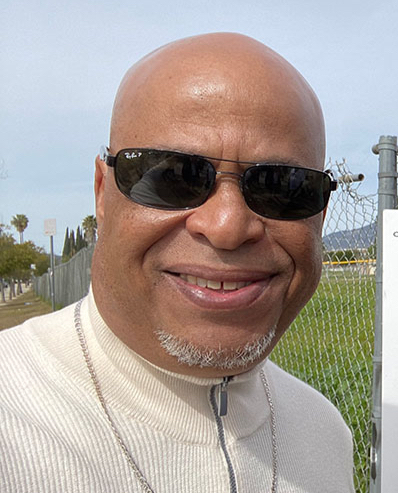
Thanks to the efforts of Crystal Jackson and the Pacoima Historical Society, the town's "undertold history" is now highlighted in the San Fernando Valley narrative.

For most of the San Fernando Valley’s recorded history, Pacoima sat at the margins of the narrative: redlined on maps, omitted from timelines, and treated as an isolated, “other” community rather than as a central part of Valley history. Its people built industries, created culture, led movements, and raised generations here, yet their contributions were rarely documented in the same places where “official” Valley history lived. That absence sent a quiet but powerful message: that Pacoima’s stories were optional, secondary, or not “important enough” to remember.
That has changed.
With the Museum of the San Fernando Valley’s Historical Timeline, Pacoima now appears right where it has always belonged: in the shared story of the Valley, not in a footnote. The timeline doesn’t just add a few dates; it threads Pacoima into the full arc of regional history, from Indigenous homelands and early settlement to civil rights, arts, and community-building. Visitors can stand in front of the exhibit and finally see Pacoima’s role acknowledged alongside better-known neighborhoods — visually, publicly, and permanently.
The book Valley Chronicles: Told and Untold Stories of the SFV takes that work even further. It stitches together stories that were scattered, forgotten, or never written down at all, including those from Pacoima and other communities that have long been left out of the “official” record. By pairing well-known Valley milestones with undertold narratives, the book doesn’t just add diversity; it changes the way people understand the Valley itself. It makes clear that you cannot tell the story of the San Fernando Valley without telling the story of Pacoima.
Partnerships with the Getty Conservation Institute and the City of Los Angeles have helped move this work from local passion to institutional recognition. Collaborating with major cultural and civic partners signals that Pacoima’s history is not just a neighborhood concern—it is a matter of regional and national significance. These partnerships bring resources, visibility, and validation, helping to ensure that Pacoima’s sites, archives, and stories are preserved, interpreted, and shared with the broader public, not just stored away in boxes or memories.
At the heart of this shift is the work of Crystal Jackson and the Pacoima Historical Society. Through books, exhibitions, film, and community storytelling, they have insisted that Pacoima must be seen and heard. Their efforts have transformed community archives into public history, turning local memory into curriculum, museum content, and media that reach new audiences. Because of this work, young people in Pacoima can now visit a museum, read a book, or watch a film and actually see themselves in the story of the Valley.
The significance of this change goes beyond one neighborhood. When positive, undertold stories are brought into mainstream history, three important things happen. First, communities gain visibility and dignity; they are no longer defined only by struggle or stereotypes, but also by creativity, resilience, and achievement. Second, the historical record becomes more accurate; a history that leaves out entire communities is not just incomplete — it is misleading. Third, future generations inherit a truer, richer understanding of where they come from, which shapes what they believe is possible for where they can go.
Pacoima’s inclusion in the Museum of the SFV Timeline, inValley Chronicles, and in partnerships with major institutions is more than a series of projects. It is a turning point. It marks the moment when an “isolated” town is finally recognized as a vital storyteller in the larger narrative of the San Fernando Valley. And it reminds us that when we choose to center positive, undertold stories, we don’t just honor the past — we change the future of how history is written, taught, and remembered.
Museum attendees examine the Historical Timeline of the San Fernando Valley Author Crystal Jackson shows her new book, Valley Chronicles: Told and Untold Stories of the San Fer Crystal Jackson and Pacoima Historical Society receive certificate


Comments