
Landmark History Timeline Project Celebrates the Diverse Story of the San Fernando Valley
Updated: Jun 15
Pacoima Historical Society and The Museum of the S.F.V. unveil complete timeline of San Fernando Valley history
(Photos by Lance Grandison Jr.)

NORTHRIDGE, Calif. — Years of research, community collaboration, and a commitment to telling stories too often overlooked culminated on June 6, when the Pacoima Historical Society and the Museum of the San Fernando Valley officially unveiled the completed "Historical Timeline of the San Fernando Valley" exhibit.
The unveiling ceremony, held at the Museum of the San Fernando Valley, marked the completion of a three-phase project that began in 2024 and has grown into one of the most ambitious efforts ever undertaken to document the region's rich and diverse history. At the center of the effort has been the Pacoima Historical Society and its president, historian and author Crystal Jackson, who served as co-project manager alongside museum representative Jackie Langa.
For Jackson, the project represents much more than a collection of historical panels. It is a way to restore forgotten narratives and ensure that generations to come understand the people and events that shaped the San Fernando Valley.
"Today, I want to frame this unveiling not just as a history lesson, but as part of our healing and of our future making," Jackson told attendees. "We're here to look honestly at what has happened, to honor the resilience and brilliance that got us this far, and to imagine together what comes next."

Giving Voice to Untold Stories
For years, the Pacoima Historical Society has made it its mission to preserve and promote stories that have often been absent from traditional histories. The completed timeline reflects that philosophy, highlighting the experiences of Indigenous peoples, immigrant communities, laborers, artists, educators, civil rights pioneers, and neighborhood leaders whose contributions helped define the Valley.
The exhibit traces the region's history from prehistoric times and the Tataviam people through the mission era, agricultural development, suburban expansion, and the social and cultural transformations that characterized the second half of the twentieth century.
Phase III, the final section unveiled this year, focuses on the years 1950 through 2000 and examines many of the social, political, and cultural developments that shaped modern Valley life.
Throughout the project, the Pacoima Historical Society championed the idea that local history belongs to everyone and that community stories deserve to be preserved with the same care and attention afforded to more widely known historical narratives.

A Vision Years in the Making
The timeline's first phase debuted in June 2024, introducing visitors to millions of years of history and the Valley's earliest inhabitants. Phase II followed in May 2025, expanding the story to include the first half of the twentieth century and placing special emphasis on underrepresented communities and previously untold histories.
The completion of Phase III now brings the project full circle.
"This area is changing faster than it's ever changed before," Los Angeles City Councilmember Bob Blumenfield said during the ceremony. "Thank you for reminding us that history goes back. Maya Angelou had that famous quote where she said you can't know where you're going until you know where you've been. That is certainly true of us here in the Valley."
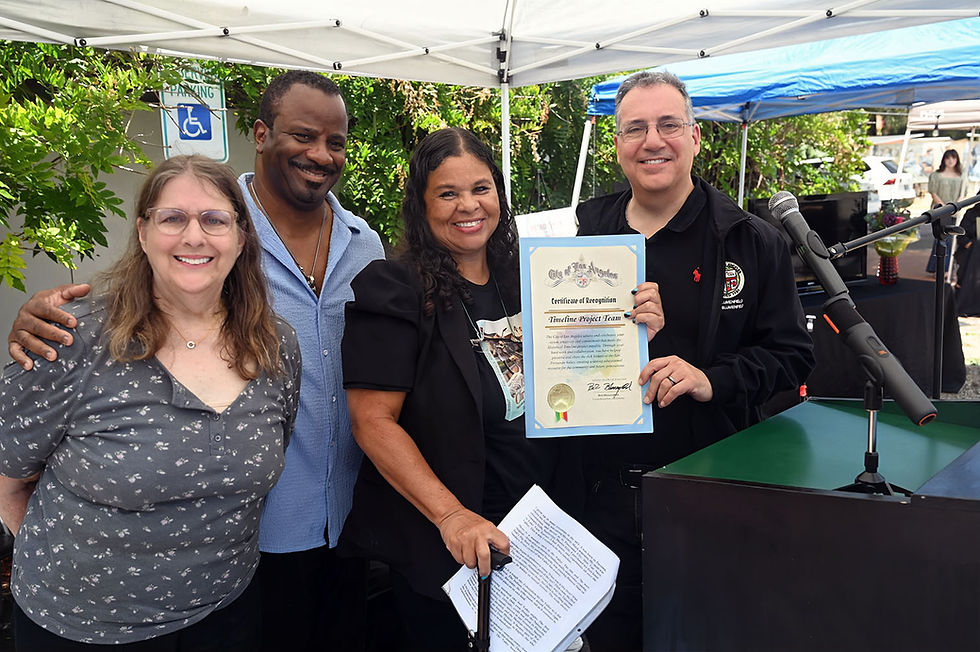
Blumenfield presented the project team with a certificate from the City of Los Angeles recognizing its "vision, creativity and commitment" in bringing the historical timeline to life.

Community Leaders Celebrate Valley Heritage
The unveiling attracted a large and enthusiastic audience of residents, historians, civic leaders, and longtime Valley advocates. Among those attending were Councilmember Bob Blumenfield, Boys & Girls Club of the San Fernando Valley Executive Director Nicole Chase, and Joy Picus, the first woman elected to represent the San Fernando Valley on the Los Angeles City Council.
Nicole Chase, whose late father Leroy Chase is featured on the timeline, praised the project for preserving stories that continue to inspire future generations.
"This is merely the beginning of something that's going to change the trajectory of so many lives," she said. "Crystal has reminded me of how important it is that we access our history and we know our history, and that our kids see themselves in that history."


U.S. Senator Alex Padilla delivered a prerecorded message congratulating the Museum of the San Fernando Valley and the Pacoima Historical Society for ensuring that future generations inherit "a fuller and more accurate picture of the people who built our communities."
From Timeline to Book

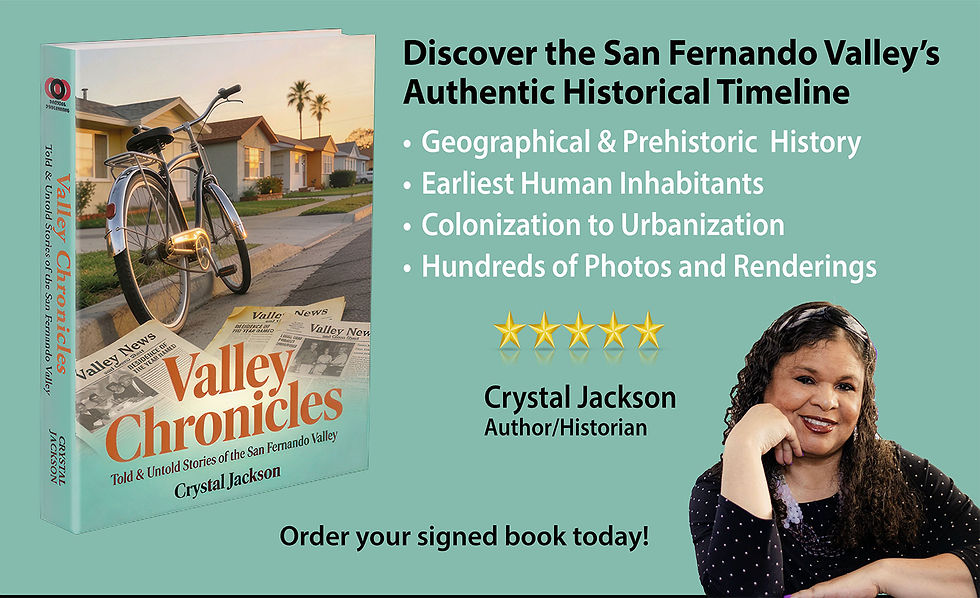
The celebration also marked the release of Jackson's new book, "Valley Chronicles: Told & Untold Stories of the San Fernando Valley." According to Jackson, the book expands upon many of the stories featured in the exhibit and offers readers a deeper exploration of the Valley's people and communities.
"There's a lot more details in it, because you can only put so many lines on a timeline," she said.
Born in Pacoima and having lived throughout the Valley, Jackson said she has long been fascinated by the region's unique identity.
"Every corner of this valley has a story," she said.
That belief has guided the work of the Pacoima Historical Society, which has emerged as one of the leading voices in documenting local history and advocating for a more inclusive understanding of the Valley's past.

With the completion of the Historical Timeline of the San Fernando Valley, the Society has reached a major milestone. Yet, for Jackson and the organization she leads, the work of preserving history is far from finished.
Instead, the unveiling stands as both a celebration of the past and a promise to future generations that the stories of the San Fernando Valley—and the people who made them possible—will not be forgotten.


Questo articolo offre una visione completa e ben articolata dell'argomento. I vari aspetti dell'argomento vengono trattati con la giusta profondità. Ho stampato alcune parti per averle a disposizione durante il lavoro. Non è semplice trovare articoli così ben documentati su questo argomento.